


This Ends In blood
To Play is the Thing in Teen-centric Macbeth Adaptation for High Schoolers
 Playwright Dani Stoller's This Ends in Blood transplants William Shakespeare's Macbeth to the realm of current-day, American high school football. Shakespeare's King Duncan and his thanes are a quarterback and his teammates plus Banquo, the equipment manager. In their company are their cheerleaders, including Mac's girlfriend, Beth. The witches are a clique of goths who hail Mac as third receiver, as first receiver, and as the quarterback! Bringing all this to life are teens playing the teens at Signature Theatre in Arlington, Virginia. Don't shake your head in Shakespurity disdain. The production, which had only two public performances (plus five for public school groups) was one of the richest nights of theater I've ever experienced.For the full interview, click here.
An Interview with Sir Trevor Nunn
White Boxes, Shakespeare Musicals, and
a Novel-ty Play Rounded With a Dream
 The second live Shakespeare play I saw was King Lear in London in 1977. Trevor Nunn directed that play. He was already well on his way to superstar director staus, and his Lear directed me into my own Shakespeare passion. We met for an interview at the the 2023 Blackfriars Playhouse Conference in Staunton, Virginia, a conversation that covered many shared experiences as well as insights into the mind behind so many landmark moments in theater.For the full interview, click here.
Hamnet
Origin Story of
Shakespeare's Leading Ladies
 Maggie O’Farrell’s intelligently addictive novel Hamnet uses historical figures in imagining the death of Shakespeare’s only son and how that may have impacted the playwright's composing Hamlet. Fiction though it is, the novel fills in the true role Shakespeare's wife, Anne Hathaway, may have played in his career and as inspiration for his plays.For the full review, click here.
Reader comment added
Hamnet
Agnes Power, not Will Power,
Carries the Film
 In the final scene of the movie version of Hamnet—a different product than the play—a young actor who looks much like his younger brother turns in a stellar performance as Hamlet. The actor playing the Ghost of Hamlet's father, on the other hand, has no clue how to play Shakespeare's text, though that actor is William Shakespeare himself. This sums up my dueling frustration and fascination with this eight-Oscar-nominated movie, nominations that included Best Picture.Thank goodness that where there's a Will, there's an Agnes. For the full review, click here.
Hamnet
Theatrical Alchemy
 Theatrical alchemy is the kind of stage magic that, after seeing a play two nights in a row, inspires desire upon waking up the next morning to see the play again—that very next day. Matinee? Evening? Both. The Royal Shakespeare Company’s production of Maggie O’Farrell’s Hamnet, adapted by Lolita Chakrabarti, is such theatrical alchemy running at the Shakespeare Theatre Company’s Harman Hall in Washington, D.C. For the full review, click here.
The Two Gentlemen of of Verona
The Two Jerks of Verona in Milan
 Veteran Blackfriars Playhouse actor and now director Aidan O'Reilly has always had a no-nonsense, speak-the-text-as-is approach to Shakespeare. He brings that approach when directing one of Shakespeare's most problematic plays, The Two Gentlemen of Verona. It's categorized as a romantic comedy, but productions strive hard to make the play's bizarre ending make comic sense for any human watching it. I've seen myriad ways theaters try to achieve a happyish ending, but a solution becomes obvious in O'Reilly's staging of the play. Taking the text at face value, this play is a romantic comedy without a romantic ending because Valentine and Proteus are jerks. They always have been, if you've been paying attention. For the complete review, click here.
Romeo and Juliet
In-the-Moment Teenage Passions
 It’s the high school jocks versus the arts crowd. In a frenetic yet endearingly sweet staging of William Shakespeare’s Romeo and Juliet at the American Shakespeare Center’s Blackfriars Playhouse in Staunton, Virginia, the ultimate tragedy is a generation of teens failing to look beyond their current moment in life. That notion has always been there in Shakespeare’s text. This production makes these kids’ lack of pausing for just a moment a palpable tragedy which goes beyond contemporary dress (actually, early 2000s) and speaks to our nation's contemporary youth suicide epidemic. That’s quite a heavy takeaway for a production that is full of comedy and breathtaking energy. For the complete review, click here.
Et tu Booth
John Wilkes Booth Saw Himself as Brutus;
What Does That Say About Brutus?
 John Wilkes Booth likened himself to Brutus in WIlliam Shakespeare's play Julius Caesar who would rid the United States of its own tyrant, Abraham Lincoln. Turning this emulation around gives us a perspective of Brutus that is far from that of the tragic hero. When both are seen as vainglorious scoundrels, that both would share the same consequences was neither irony nor fate: it was ordained. For the complete commentary click here.

On Beckett
On Bill Irwin On Beckett
Bill Irwin is doing his one-actor show On Beckett at the Shakespeare Theatre Company's Klein Theatre, comprising a bit more than 80 minutes of Irwin talking about Samuel Becket, the Irish playwright who wrote his prose and plays in French, but this play is maybe more about Irwin, the veteran Tony Award-winning actor who describes a real love-hate relationship with Becket.… To continue my review, click here, and good luck.
 Antony and Cleopatra
Beating Hearts Inside Shakespeare's Text
Sex and violence is a given for a play titled Antony and Cleopatra featuring the collision between the warrior order of the Roman Empire and the seductive exotica of Dynastic Egypt. The Synetic Theatre "Wordless Shakespeare" version of the play has plenty of both in its athletic fight and seductive courtship scenes. It's the ingenious casting of the two actor dancers playing the leads that lift this visual vehicle into a personality-driven drama of love and hate, power and despair, loyalty and treachery. For the complete review click here.
A Christmas Carol
From the Mouth of Dickens and His Many Creations
 Of all the characters Angela Iannone played in Charles Dicken's "A Christmas Carol" at the American Shakespeare Center's Blackfriars Playhouse—that number includes Jacob Marley's Ghost, Fred, Bob Cratchit, Mrs. Cratchit, the countless Cratchit children but especially Tiny Tim, Mr. Fezziwig, Belle, two charity solicitors, the charwoman, the laundress, the undertaker, the boy as big as the prize turkey in the Poulterer's shop, the Ghosts of Christmas Past, Present, and Yet To Come, and Ebeneezer Scrooge—the most important was Charles Dickens himself. For it was Iannone as Dickens who arrived on the Blackfriars Playhouse stage in Staunton, Virginia, for a one-presentation-only of his Christmas-themed story.For the rest of the review and its significance on Thanksgiving Day, click here.
Play on!
And Some Find Greatness Between the Lines
 William Shakespeare and Duke Ellington were collaborating long before Sheldon Epps and Cheryl L. West brought them together for Play On!, a musical about a love triangle involving a Duke, a regal Lady, and a woman disguised as a man as their go-between messenger. The musical transplants Shakespeare’s Twelfth Night to the Harlem Renaissance (1920s–1930s) with a score comprising Ellington tunes, andin the hands of director Lili-Anne Brown and the feet, legs, and voices—oh! the voices—of the cast performing the musical at Signature Theatre in Arlington, Virginia, recently closed out a mostly sold-out run last weekend. Maybe for Shakespeare purists it won’t mean a thing if it ain’t Bard writing, but aside from being fun stuff and great Ellington music, Play On! captures and even enhances some of the universal humanism Twelfth Night explores. For the complete review, click here.
 With aside:
Such Sweet Thunder
The Duke Finds Kindred Spirit in The Bard
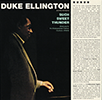
In 1956, the four-year-old Stratford, Canada, Shakespeare Festival invited Duke Ellington and his orchestra to perform a series of concerts. Ellington's interaction with the festival's Shakespeare practitioners inspired him and his orchestrator, Billy Strayhorn, to compose "Such Sweet Thunder," a suite of 12 songs based on Shakespeare's characters and the Bard himself. Ellington premiered the piece the following year. Ellington certainly knew Shakespeare, based on his insights in literally playing the playwright's characters. For the full review, click here.
Merry Wives
Today's Merry Wives; a Timeless Falstaff
 It plays like the premiere of a new reality series franchise. Merry Wives (of Harlem) stars Anne Page, Johnny Falstaff, and the merry wives, Madam Nkechi Ford and Madam Ekue Page, streaming now at the Shakespeare Theatre Company's Harman Hall in Washington, D.C. Sounds ridiculous? So is the play it's built on, William Shakespeare's The Merry Wive's of Windsor. As adaptations of Shakespeare’s works go, Jocelyn Bioh’s is one of the most thoroughly Shakespearean transfers to the 21st century I've seen of any of the Bard’s 16th century plays. A big reason: Shakespeare’s great comic creation, Sir John Falstaff, gets a thoroughly modern rendition in the performance of Jacob Ming-Trent, destined to be one of the most indelible Falstaff's romping through my memories to the end of my time on this earth. For the full review, click here.